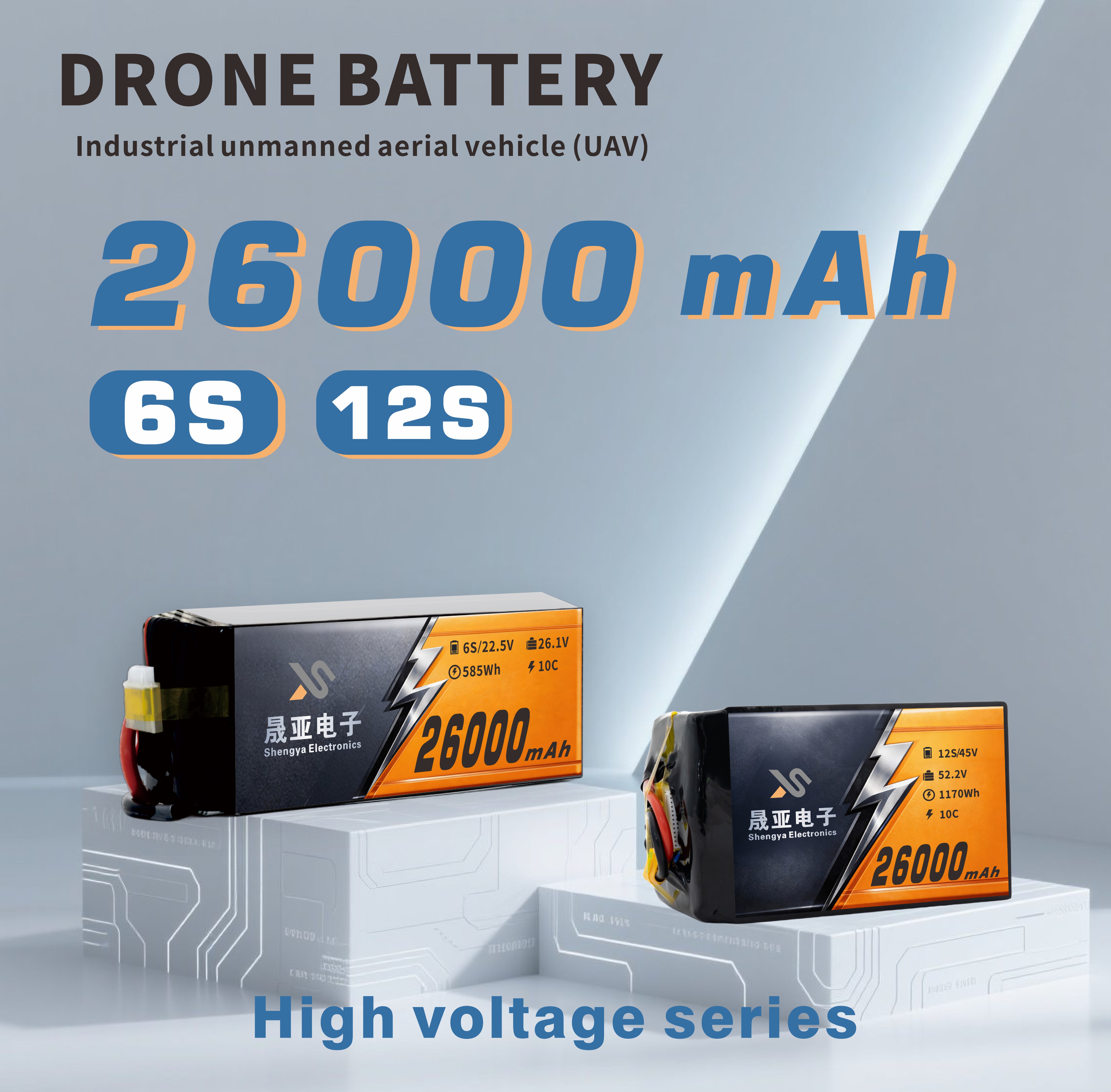
Battery reliability dictates the fine line between a successful aerial mission and a catastrophic failure. Imagine a high-end LiDAR mapping drone hovering over a dense canopy. Picture an agricultural UAV carrying a massive payload of liquid fertilizer. In these high-stakes scenarios, a mid-air power failure is not merely an operational inconvenience. It results in total equipment loss, severe property damage, and massive safety liabilities.
The core vulnerability lies within the chemical architecture of multi-cell lithium power sources. Over time and through repeated use, individual cells naturally fall out of synchronization. Minute manufacturing differences and uneven thermal distribution cause some cells to drop in voltage much faster than others. When this happens, the depleted cell acts as an anchor. It artificially limits the entire pack's performance, slashes flight times, and introduces severe fire hazards.
The definitive engineering solution to this electrochemical drift is an advanced Battery Management System. Functioning as the central electronic brain of the power unit, this system constantly monitors, evaluates, and adjusts individual cell voltages. This guarantees safe, efficient, and prolonged operation.
This comprehensive guide explores the internal mechanics of how an Intelligent Drone Battery BMS operates. We will break down the specific methodologies used to synchronize cells. Furthermore, we will explain why this sophisticated technology is an absolute necessity for modern commercial aviation.
Key Takeaways
Cell Imbalance is Inevitable: Unavoidable variations in operational temperature, factory manufacturing tolerances, and natural chemical aging cause individual cells to charge and discharge at slightly different rates.
Two Primary Balancing Methods: A smart management system utilizes either passive balancing, which bleeds off excess energy as heat, or active balancing, which physically transfers energy from stronger cells to weaker ones.
Crucial for Safety and Longevity: Consistent cell synchronization prevents dangerous localized overcharging and irreversible deep discharging. This drastically reduces thermal runaway risks and extends the operational lifespan of the power unit.
Essential for Commercial Use: Heavy-duty industrial UAVs require intelligent systems to safely handle massive electrical loads and provide real-time telemetry data for precise flight planning.
What is an Intelligent BMS Drone Battery?
To fully grasp how cell balancing works, we must first define the underlying hardware. In simple terms, a Battery Management System is an electronic control framework integrated directly into a rechargeable pack. Its primary directive is to protect the battery from operating outside its designated safe parameters. It actively monitors voltage, current draw, and ambient temperature.
However, the aviation industry distinguishes heavily between a standard protection board and a truly intelligent system. A basic consumer-grade board typically functions as a simple circuit breaker. It offers fundamental cutoff protection. It severs the power connection if the total pack voltage drops too low or spikes too high. It treats the entire battery as a single monolithic block, largely ignoring the specific health of the individual cells inside.
In sharp contrast, smart battery management transforms the power supply into an active, communicative component of the aircraft. These sophisticated systems incorporate onboard microprocessors, highly precise analog-to-digital converters, and robust communication protocols like CAN bus or SMBus. Rather than just looking at the big picture, they actively monitor micro-voltages at the individual cell level. By gathering this granular data, the system makes macro-level decisions. It communicates directly with the drone's flight controller to adjust motor output or trigger automatic return-to-home sequences long before a critical power failure materializes.
Why Do Drone Battery Cells Become Unbalanced?
Even under the strictest quality control standards globally, no two lithium cells leave the factory perfectly identical. These microscopic manufacturing tolerances mean that slight differences in internal resistance, overall capacity, and self-discharge rates are omnipresent. From the very first flight, these microscopic differences begin to compound.
Thermal gradients further accelerate this uneven degradation. Picture an industrial octocopter executing a heavy-lift maneuver on a sweltering summer day. The cells located deep within the physical center of the battery pack insulate one another. They retain significantly more heat than the cells exposed to the outer casing. Because elevated temperatures accelerate chemical aging, the hotter central cells will degrade faster. Consequently, their internal resistance rises, causing them to discharge at a completely different rate compared to their cooler counterparts.
As the battery undergoes dozens of charging and discharging cycles, these minor discrepancies widen into a highly noticeable voltage gap. The cells with slightly lower capacity will empty faster during flight and hit their maximum voltage faster during charging.
This dynamic creates a severe operational bottleneck. Consider a multi-cell pack as a chain that is only as strong as its weakest link. During a flight, the management system must trigger a low-voltage alarm and force a landing as soon as the weakest cell reaches its critical depletion threshold, typically around 3.2V for standard lithium-polymer chemistry. Even if the remaining healthy cells still hold plenty of energy, that power becomes entirely unusable. Without intervention, the pack's total effective capacity shrinks to match the capacity of that single weakest cell.
Exactly How Does the System Balance Cells?
How do we fix this electrochemical bottleneck? An intelligent management system employs highly specific hardware mechanisms to equalize the voltage across the entire array. Modern aviation power systems typically rely on one of two primary balancing methodologies.
The Passive Cell Balancing Method
Passive balancing remains the most common and cost-effective strategy utilized in standard commercial packs. The operational mechanics are relatively straightforward. During the charging cycle, the microprocessor continuously scans the array. It identifies which cells are reaching their maximum voltage limit ahead of the rest.
To prevent these nearly full cells from overcharging while waiting for the lagging cells to catch up, the system activates dedicated bypass circuits. These circuits route the incoming charging current through tiny resistors. They physically bleed off the excess electrical energy by converting it into heat. This deliberate slowing of the charge rate allows the weaker cells the time they need to absorb more current and equalize with the rest of the pack.
While highly reliable and structurally simple to implement, passive balancing possesses distinct drawbacks. It inherently wastes electrical energy and generates additional thermal load inside the battery casing. This excess heat must be carefully managed through adequate ventilation and heatsink design.
The Active Cell Balancing Method
Active balancing represents a significantly more advanced tier of power management. Instead of wastefully burning off excess energy as heat, an active system redistributes it. Utilizing internal capacitors or inductors, the circuitry physically shuttles electrical energy from the highest-voltage cells directly into the lowest-voltage cells.
This method operates with remarkable efficiency. Because it does not rely on resistors, it generates a fraction of the heat. Furthermore, unlike passive systems that typically only engage while plugged into a charger, active balancing operates continuously during both charging and discharging phases. This real-time energy transfer maximizes the usable capacity of the pack while the drone is mid-air. The primary trade-offs for this premium performance are increased physical weight, larger circuit boards, and higher manufacturing costs.
Core Comparison: Active vs. Passive Balancing
Feature
Passive Balancing
Active Balancing
Mechanism
Burns excess energy as heat via resistors.
Transfers energy from high to low voltage cells.
Efficiency
Low. Wastes power during the charge cycle.
High. Recycles power within the pack.
Thermal Output
High. Requires good cooling design.
Low. Minimal heat generation.
Operational Phase
Typically only active during charging.
Active during both charging and discharging.
Best Application
Consumer drones, light-duty commercial UAVs.
Heavy-lift industrial drones, high-capacity rigs.
Actionable Selection Guide for Industrial UAVs
When selecting a power solution, the choice between active and passive architectures depends entirely on the operational scope of the aircraft. Stop looking at just the total milliamp-hour rating. You must match the BMS architecture to your payload.
For consumer photography drones and light-duty quadcopters, passive balancing is entirely sufficient. Their power units are relatively small, flight durations are short, and the minor heat generated during a charging cycle is easily dissipated. However, the paradigm shifts dramatically for heavy-duty commercial applications.
Scaling up total capacity magnifies the absolute necessity for precise synchronization. If you run a professional cinematography rig, a mid-voltage setup is standard. In this scenario, utilizing a 6S to 12S Intelligent BMS Drone Battery ensures flawless voltage continuity to maintain gimbal stability and motor responsiveness. The system processes multi-channel data simultaneously without latency.
Conversely, heavy-lift agricultural sprayers or long-range cargo delivery drones demand massive power. To reduce current draw and minimize severe heat buildup, engineers increase the series count. Upgrading to a 24S Industrial UAV Battery becomes essential. These extreme setups require the relentless efficiency of active balancing to prevent a single lagging cell from destabilizing a massive aircraft mid-flight. Active balancing keeps these high-capacity industrial packs significantly cooler during rapid turnaround times in the field.
Industry Trends: The Shift Towards Predictive Battery Analytics
Looking at the broader landscape of commercial UAV technology, the industry is rapidly transitioning from reactive safety measures to predictive analytics. Recent developments in drone power management highlight a strong trend toward cloud-connected BMS architectures integrated with Artificial Intelligence.
Modern intelligent systems are no longer just balancing cells in isolation. They are logging micro-variations in internal resistance and temperature over hundreds of flights. By uploading this telemetry to cloud-based fleet management platforms, AI algorithms analyze the degradation curve. This technology can predict individual cell failure weeks before a physical issue occurs in the field. This predictive maintenance allows enterprise operators to retire or refurbish specific battery packs safely. As computational power becomes more compact, the line between a battery management system and an onboard flight diagnostics computer continues to blur. We are paving the way for autonomous drone fleets that self-regulate their power health.
The Hidden Benefits of Smart Power Systems
Investing in sophisticated power management provides empirical advantages that directly impact an operator's efficiency and financial return on investment.
By keeping cells perfectly equalized, the management system guarantees that pilots can extract every last usable drop of energy out of the pack. When all cells hit their depletion threshold simultaneously, no residual energy is left trapped inside the casing. This translates directly to extended hover times. Mapping drones can capture more acreage per flight, and delivery UAVs can service wider geographic radii.
Furthermore, industrial drone batteries represent a massive capital expenditure. Unbalanced cells are highly susceptible to micro-overcharges, which cause dangerous lithium plating on the anode, and deep discharges, which dissolve copper current collectors. Properly leveraging Smart Battery Management prevents these irreversible chemical degradation mechanisms. By enforcing strict voltage parameters, a premium BMS can effectively double the total cycle life of the pack. This saves operators thousands of dollars in premature replacement costs.
The most critical advantage is undeniable safety. Lithium chemistries are highly volatile when pushed past their limits. If a standard charger malfunctions and supplies excessive current to an unbalanced pack, a full cell can easily trigger thermal runaway. This is a catastrophic chain reaction resulting in fire or explosion. An intelligent system physically eliminates this risk by actively blocking charge current long before dangerous thresholds are breached.
Maintenance Protocols from the Field
Even with advanced autonomous balancing algorithms running in the background, flight crews must adhere to strict maintenance protocols. Proper handling assists the system in preserving cell health.
Proper storage is paramount. Never leave a drone battery sitting fully charged or completely depleted for extended periods. Most advanced intelligent batteries feature an auto-discharge function. This slowly bleeds the pack down to a safe storage voltage, around 3.8V per cell, after a few days of inactivity. If this feature is absent, technicians must manually discharge the packs to prevent internal swelling and capacity loss.
In addition, operators must avoid extreme temperature exposure. Pulling a battery out of a freezing equipment truck in the dead of winter and immediately forcing it into a high-amperage takeoff causes severe voltage sag. This will trick the BMS into triggering an emergency landing. Always pre-heat batteries to at least 15 degrees Celsius before deployment. Never leave them baking in a hot vehicle under direct sunlight.
Finally, schedule regular full charge cycles. While partial charging is fine for rapid field operations, it is highly recommended to periodically perform a slow, uninterrupted charge from roughly 20 percent up to full capacity. This extended window gives the passive or active balancing circuits the necessary time to fully synchronize the cells and recalibrate the software's capacity estimates.
Conclusion
Cell balancing is undoubtedly the unsung hero of modern drone aviation. While motors and flight controllers dictate how a drone flies, the Battery Management System dictates whether it stays in the air. By continuously monitoring, equalizing, and protecting the individual lithium cells, an intelligent BMS takes the guesswork out of power maintenance.
As industrial UAVs are tasked with carrying heavier payloads over longer distances, relying on basic, unprotected power sources is no longer a viable option. It is a severe operational liability. Upgrading to smart power management ensures maximum flight times, protects massive equipment investments, and guarantees the safety of ground personnel.
To ensure your commercial fleet operates at peak efficiency, it is time to explore advanced, intelligently managed power solutions tailored for high-stakes aviation. Review reliable, enterprise-grade drone batteries at Shengya Power today to safeguard your next mission and maximize your operational uptime.
FAQ
What happens if a drone battery is not balanced?
If cells are left unbalanced, the lowest-voltage cell will deplete rapidly during operation. This causes the drone's low-voltage alarm to trigger prematurely, drastically reducing flight time and potentially forcing an emergency crash landing. During the charging phase, the highest-voltage cell may absorb excessive current and overcharge, leading to physical swelling, chemical venting, or a catastrophic fire.
Can a Smart Battery Management system fix a completely dead cell?
No. While an intelligent system can effectively balance healthy cells that have slightly drifted apart in voltage, it cannot miraculously repair a cell that has suffered irreversible chemical degradation. If a single cell drops below its absolute minimum safe threshold or develops severely high internal resistance, the BMS will permanently lock the pack to prevent highly dangerous charging attempts.
How long does it take to balance cells?
The required time depends heavily on the chosen balancing method and the severity of the voltage gap. Minor balancing occurs seamlessly during a standard charging cycle, typically taking one to two hours. However, severely out-of-balance packs may require several hours on a very slow, low-amperage charge setting. This allows the bypass resistors or active capacitors enough time to fully equalize the array.
Do advanced semi-solid-state drone batteries still need cell balancing?
Yes. While semi-solid-state chemistries offer significantly higher energy density and superior safety profiles compared to traditional LiPo packs, they are still constructed from multiple individual cells wired in series. Therefore, they are still subject to manufacturing tolerances and thermal gradients. They absolutely require an intelligent management system to maintain optimal cell synchronization and safely maximize their high-capacity potential.
Why do industrial drone batteries swell, and can balancing prevent it?
Battery swelling, or "puffing," occurs when electrolyte decomposes into gas due to heat, overcharging, or deep discharging. While balancing cannot fix a battery that has already swelled, a high-quality BMS actively prevents the conditions that cause it. By ensuring no single cell is overcharged during a cycle, the BMS stops the localized heat and stress that lead to gas generation in the first place.
How often should flight crews calibrate a smart drone battery?
For heavy commercial use, flight crews should perform a full calibration cycle every 20 to 30 flights, or at least once a month. This involves flying the battery down to about 15 to 20 percent, allowing it to cool completely, and then charging it slowly to 100 percent without interruption. This process gives the BMS ample time to balance the cells perfectly and recalibrate its State of Charge algorithm for accurate telemetry data.