Every single gram matters in aviation. As an engineer optimizing propulsion systems, I constantly wrestle with a stubborn physics problem. We face a relentless tug-of-war between extending flight times and strictly managing aircraft weight. Every component bolted onto an unmanned aerial vehicle degrades its aerodynamic efficiency. Yet, no element dictates the success or failure of a mission quite like the power source. Whether you are conducting a high-altitude topographical survey or weaving through trees at high speeds, your energy reserves define your exact operational boundaries.
Across both commercial and hobbyist sectors, Lithium Polymer chemistry remains the undisputed industry benchmark. This dominance stems from its remarkable energy density and its ability to discharge massive amounts of current on demand. These are vital traits for lifting heavy sensor payloads and executing aggressive maneuvers. However, pinpointing the perfect capacity is far more nuanced than assuming a larger pack will automatically keep you airborne longer. This comprehensive guide breaks down how to calculate the exact energy reserves your specific airframe requires. We will factor in motor efficiency, payload demands, and cutting-edge battery form factors.
Key Takeaways
Capacity vs. Weight Trade-off: Bolting on a larger battery naturally increases potential flight time, but only up to a strict mathematical threshold. Beyond that point, the added physical mass causes severe diminishing returns.
Application Dictates Capacity: Agile racing drones thrive on smaller reserves, whereas commercial agriculture or mapping platforms depend on massive energy solutions.
Form Factor Matters: Utilizing a flexible pouch design provides a superior energy-to-weight ratio compared to rigid alternatives, making it the standard for maximizing endurance.
Holistic System Matching: Raw milliampere-hours represent just one piece of the puzzle. Capacity must be precisely matched with the drone’s operational voltage, discharge rate, and average motor draw to prevent thermal runaway.
Custom Solutions: Enterprise fleets scaling their operations achieve the highest efficiency by tailoring their power systems specifically to their proprietary chassis dimensions and advanced data requirements.
Before diving into complex aerospace calculations, one must grasp the foundational metrics of electrical storage. In the context of unmanned aviation, battery capacity is measured in Milliampere-hours or Ampere-hours. Think of this metric as the exact volumetric size of your drone's fuel tank. Scientifically speaking, it indicates the total amount of electrical current a battery can discharge continuously over a period of exactly one hour before hitting absolute depletion.
Specifically, let us look at a practical example. Imagine a battery rated at 5000 Milliampere-hours, which equals 5 Ampere-hours. In a sterile laboratory environment, it can theoretically provide a steady current of 5 amps for 60 minutes. If your quadcopter's propulsion system draws 10 amps continuously to maintain a hover, that same fuel tank will run dry in exactly 30 minutes. Grasping this baseline concept is the vital first step in engineering a reliable, predictable flight system.
Furthermore, capacity directly correlates to the physical volume and energy density of these cells. Lithium Polymer is the preferred chemical architecture for modern aviation because it heavily outperforms traditional cylindrical cells in high-draw scenarios. Instead of a liquid solvent, these cells utilize a solid or gel-like polymer electrolyte. As engineers attempt to increase the capacity rating to keep drones in the sky longer, the physical mass of the lithium and conductive copper layers must also increase. Energy density is therefore the absolute limiting factor in drone design.
The Golden Rule: Balancing Capacity, Weight, and Flight Time
A pervasive myth among novice drone operators is that equipping an aircraft with the absolute largest battery it can physically carry will yield the longest possible flight time. In reality, the laws of aerodynamics and physics strictly prohibit this due to the law of diminishing returns. Increased electrical capacity inherently adds dead weight to the airframe.
As the drone becomes heavier, the flight controller must command the motors to spin faster simply to generate enough thrust to maintain a basic hover. This increased mechanical workload forces the electronic speed controllers to pull significantly more amps from the battery. Eventually, you cross a critical inflection point. At this stage, the extra power consumed to lift the battery's own weight completely cancels out the additional energy it provides. The result is a sluggish, unresponsive aircraft with zero net gain in flight duration.
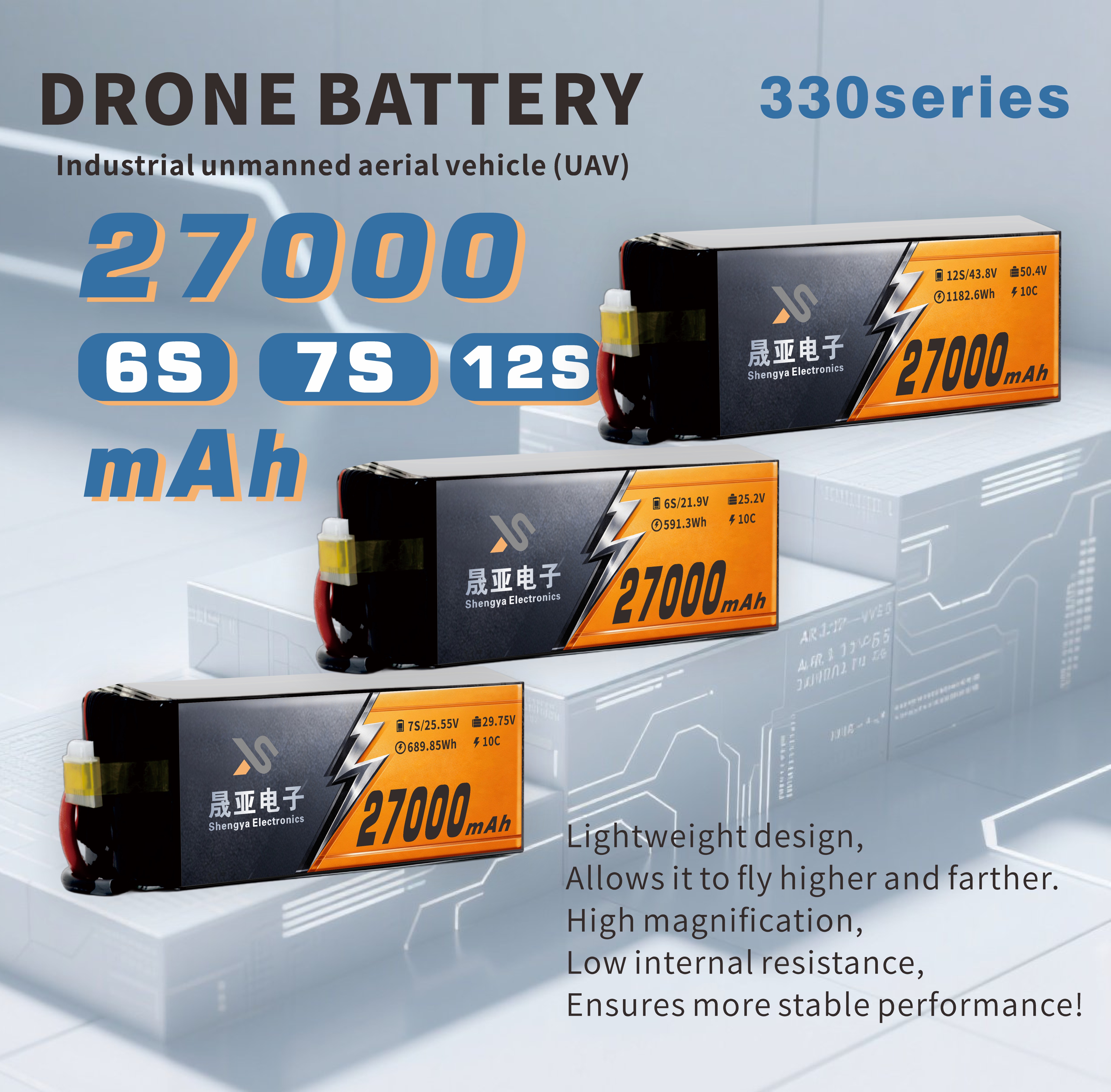
To combat this aggressive diminishing returns curve, commercial manufacturers prioritize the integration of a Lightweight UAV Battery. By stripping away unnecessary structural casing weight and optimizing the internal chemical ratios, engineers can push the maximum flight threshold much further. For instance, utilizing a 27000mAh semi-solid state pack allows commercial platforms to carry heavy external sensors like thermal cameras or LiDAR scanners without sacrificing their required operational radius.
Industry Trends: The Shift Towards High-Density Energy Solutions
Looking at recent developments across the commercial aerospace sector, there is a clear paradigm shift regarding energy storage strategies. The industry is rapidly moving away from traditional liquid electrolytes. Recent regulatory approvals for beyond visual line of sight flights demand safer, longer-lasting power sources. Consequently, developers are heavily investing in semi-solid state chemistries and high-voltage architectures.
In addition, market analyses indicate that enterprise operators are demanding longer autonomous flight times for tasks like pipeline inspection and large-scale agricultural spraying. The transition toward solid-state technology drastically improves energy density. This allows drones to store roughly 20 to 30 percent more power within the same physical weight class. These newer chemical compositions exhibit significantly lower thermal volatility, addressing the safety concerns that have long plagued industrial drone fleets operating in extreme weather conditions.
How to Calculate the Ideal Capacity for Your Drone
Determining the exact energy reserves your aircraft requires does not have to be a game of trial and error. By utilizing empirical data pulled from your drone's telemetry or motor specification sheets, you can forecast estimated flight times with remarkable accuracy. The standard calculation used by aviation engineers is straightforward.
You simply divide your battery capacity in Ampere-hours by the average amp draw of your motors, and multiply that result by 60. For instance, if you are building a custom quadcopter that draws an average of 20 amps during a standard hover, and you strap a 10 Ampere-hour pack to the chassis, you divide 10 by 20 to get 0.5. Multiply that by 60, and you achieve a theoretical flight time of exactly 30 minutes.
However, applying theoretical calculations directly in the field is a recipe for a crash. It is a critical industry standard that you should never drain a lithium polymer cell to zero percent capacity. Discharging these cells below 3.2 volts per cell causes irreversible chemical oxidation. This severely bloats the pack and drastically reduces its overall lifespan.
To ensure safety, professional pilots strictly adhere to the 80 Percent Rule. This means you must plan your missions to land the aircraft while 20 percent of the battery capacity still remains in reserve. Therefore, you need to multiply your theoretical flight time by 0.8 to find your true operational window. Returning to the previous example, that 30-minute theoretical maximum becomes a highly reliable 24-minute safe flight time.
Capacity Requirements by Drone Use Case
The math changes rapidly the moment you attach external hardware to the airframe. Adding high-resolution cinema gimbals, delivery mechanisms, or agricultural spraying fluid drastically alters the gravitational pull on the aircraft. Every extra gram forces the propulsion system to draw more continuous current. To simplify your selection process, I have compiled an engineering reference table based on real-world payload data.
Drone Application
Recommended Capacity
Ideal Chemistry / Form Factor
Engineering Priority
FPV and Racing
1000mAh – 2000mAh
Standard LiPo, High Discharge
Extreme agility, minimizing mass
Consumer Photography
3000mAh – 7000mAh
Standard LiPo, Soft Pack
Balancing camera weight and flight time
Mapping and Surveying
20,000mAh – 28,000mAh
Semi-Solid State
Long endurance, stable low-amp draw
Heavy-Lift / Agriculture
30,000mAh – 40,000mAh+
Solid-State Li-ion
Maximum energy density, thermal safety
In contrast to consumer platforms, industrial unmanned vehicles operate in an entirely different weight class. Heavy-lift cinematic rigs and autonomous delivery systems require massive energy reservoirs. For high-endurance enterprise missions, operators are rapidly upgrading to next-generation chemistry. Integrating a high-capacity 35000mAh solid-state Li-ion battery allows commercial platforms to achieve extended autonomous flight times without compromising their ability to carry heavy industrial sensors.
Why Choose a Soft Pack Form Factor?
When evaluating energy storage options, the physical construction of the outer casing is just as critical as the internal chemical makeup. You will generally encounter two styles in the field: hard-cased and soft-packed. A soft pack utilizes a flexible, laminated aluminum foil pouch to contain the delicate chemical layers and electrolyte. This explicitly avoids the rigid, heavy plastic shells commonly found in surface remote control vehicles.
The overriding advantage of this foil pouch design is the total elimination of dead weight. Hard plastic casings add passive mass to the aircraft that provides absolutely zero electrical value. By stripping this away, manufacturers can dedicate a much higher percentage of the total battery weight strictly to active chemical materials. For commercial manufacturers looking to optimize their proprietary airframes, sourcing a Soft Pack Drone Battery ensures the highest possible energy-to-weight ratio. This directly translates to longer, more profitable flight operations.
Beyond Capacity: Voltage and C-Rating
It is a common mistake in the field to assume that capacity alone dictates the total energy stored in a pack. Capacity must always be calculated in tandem with voltage. Drone batteries are constructed by wiring multiple 3.7-volt cells in series. To understand true energy capacity, you must calculate Watt-hours, which is Ampere-hours multiplied by Voltage.
For example, a 14.8-volt 5000 Milliampere-hour battery contains roughly 74 Watt-hours of total energy. By contrast, a 22.2-volt 5000 Milliampere-hour battery contains 111 Watt-hours of energy. Therefore, even though the capacity rating is identical on the label, the higher voltage pack holds significantly more total power. It weighs more, and it requires an entirely different motor specification to operate efficiently.
Furthermore, a massive capacity rating is entirely useless if the battery cannot deliver that stored energy to the motors fast enough. This delivery speed is measured by the Continuous Discharge Rate, commonly known as the C-rating. The maximum continuous amp draw a battery can safely provide is calculated by multiplying the capacity in Ampere-hours by the C-rating.
Imagine you have a 10 Ampere-hour battery with a 15C rating. It can safely deliver 150 amps continuously. If your heavy-lift agricultural drone requires 200 amps to maintain a hover, that battery will rapidly overheat. It will puff up and potentially catch fire mid-flight, regardless of how large its capacity is. The C-rating must always satisfy the peak demands of your propulsion system.
Upgrading Your Fleet: When to Consider Custom Solutions
Standard power packs are perfectly adequate for consumer platforms and weekend hobbyist builds. However, as enterprise drone operations scale, these generic batteries often present severe logistical limitations. They are built to generalized dimensions, utilize basic power connectors, and often leave awkward, unbalanced empty space inside specialized drone battery bays.
When a commercial fleet experiences restricted flight times due to awkward weight distribution, it is time to transition to a bespoke solution. Partnering with a specialized manufacturer to develop Custom UAV Batteries provides enterprise operators with a distinct operational advantage. Custom engineering allows businesses to dictate the exact physical dimensions. For instance, a multi-voltage 28000mAh custom pack can be designed to slide perfectly into proprietary chassis designs, maintaining a flawless center of gravity.
Specifically, custom solutions can integrate advanced Battery Management Systems. These smart modules communicate cell health, temperature spikes, and exact remaining capacity directly to the pilot's ground station, guaranteeing maximum safety for autonomous systems.
Conclusion
Finding the ideal capacity for your drone is a meticulous exercise in balancing aircraft weight, payload requirements, and necessary flight duration. Strapping the largest available battery to your airframe will almost always result in sluggish performance due to excess mass. Instead, operators must calculate their specific amp draw and apply the 80 Percent Rule to forecast safe, realistic flight times.
By prioritizing high energy density and efficient form factors, pilots can maximize their time in the air without sacrificing payload capability. If you are operating at an enterprise level and struggling with endurance bottlenecks, it is time to upgrade your power architecture. We highly encourage you to evaluate your current power systems. Head over to Shengya Power to explore our advanced solid-state and custom OEM battery solutions. Matching the right technology to your specific chassis will drastically elevate your fleet's flight performance, safety, and overall operational efficiency.
FAQ
Can I put a higher capacity battery in my drone?
Yes, upgrading to a higher capacity is possible, but only under strict engineering conditions. The physical dimensions of the new pack must fit securely within the drone's battery tray without throwing off the aircraft's center of gravity. Additionally, the voltage must perfectly match what your electronic speed controllers and motors are rated for. Most importantly, you must ensure the added weight of the larger battery does not negate the extra capacity, which would result in shorter flight times and poor handling.
How long does a 10,000 Milliampere-hour drone battery last?
The duration depends entirely on the specific drone's power draw and aerodynamic profile. If placed on a highly efficient, fixed-wing mapping airframe with a low continuous amp draw, a 10,000 Milliampere-hour pack could easily sustain flight for over an hour. Conversely, if you strap that exact same battery onto a heavy-lift multirotor carrying a massive cinema camera, the aggressive current draw from multiple large motors might completely drain the battery in just 15 minutes.
What is the difference between a hard case and a soft pack drone battery?
Hard case batteries feature a rigid, durable plastic or metal outer shell designed to protect the internal cells from violent physical impacts. They are popular for surface remote control cars. Soft packs utilize a lightweight, laminated foil wrapping. Because they discard the heavy protective shell, soft packs offer a vastly superior capacity-to-weight ratio. This weight savings makes them the strict, undisputed standard for high-performance aviation where every gram matters.
Why is my high-capacity drone battery getting hot during flight?
Excessive heat is usually a primary indicator that the battery's discharge rate is too low for the current draw demanded by the drone's motors. Even if a battery boasts a massive capacity, if it cannot release that stored energy fast enough to meet the motors' throttle demands, internal resistance builds up rapidly. This causes the battery to overwork, generating dangerous levels of heat that can lead to permanent cell swelling and potential mid-air failure.
How do I know if my drone battery capacity is degrading?
Battery degradation typically manifests as a noticeable reduction in total flight time despite receiving a full charge. From an engineering perspective, you will also notice increased voltage sag. This means the voltage drops rapidly the moment you apply throttle, triggering premature low-battery warnings on your flight controller. If your battery takes significantly less time to charge than it used to, or if the physical pouch begins to swell, the internal chemical capacity has permanently degraded.
Does temperature affect the true capacity of a drone battery?
Absolutely. Lithium polymer chemistry is highly sensitive to ambient temperatures. In cold weather environments, the internal chemical reactions slow down significantly, which increases internal resistance. This prevents the battery from discharging its full rated capacity, often cutting your expected flight time by 20 to 40 percent. Conversely, operating in extreme heat can over-excite the chemistry, leading to thermal runaway and permanent capacity loss. Always pre-warm your batteries to room temperature before winter flights.