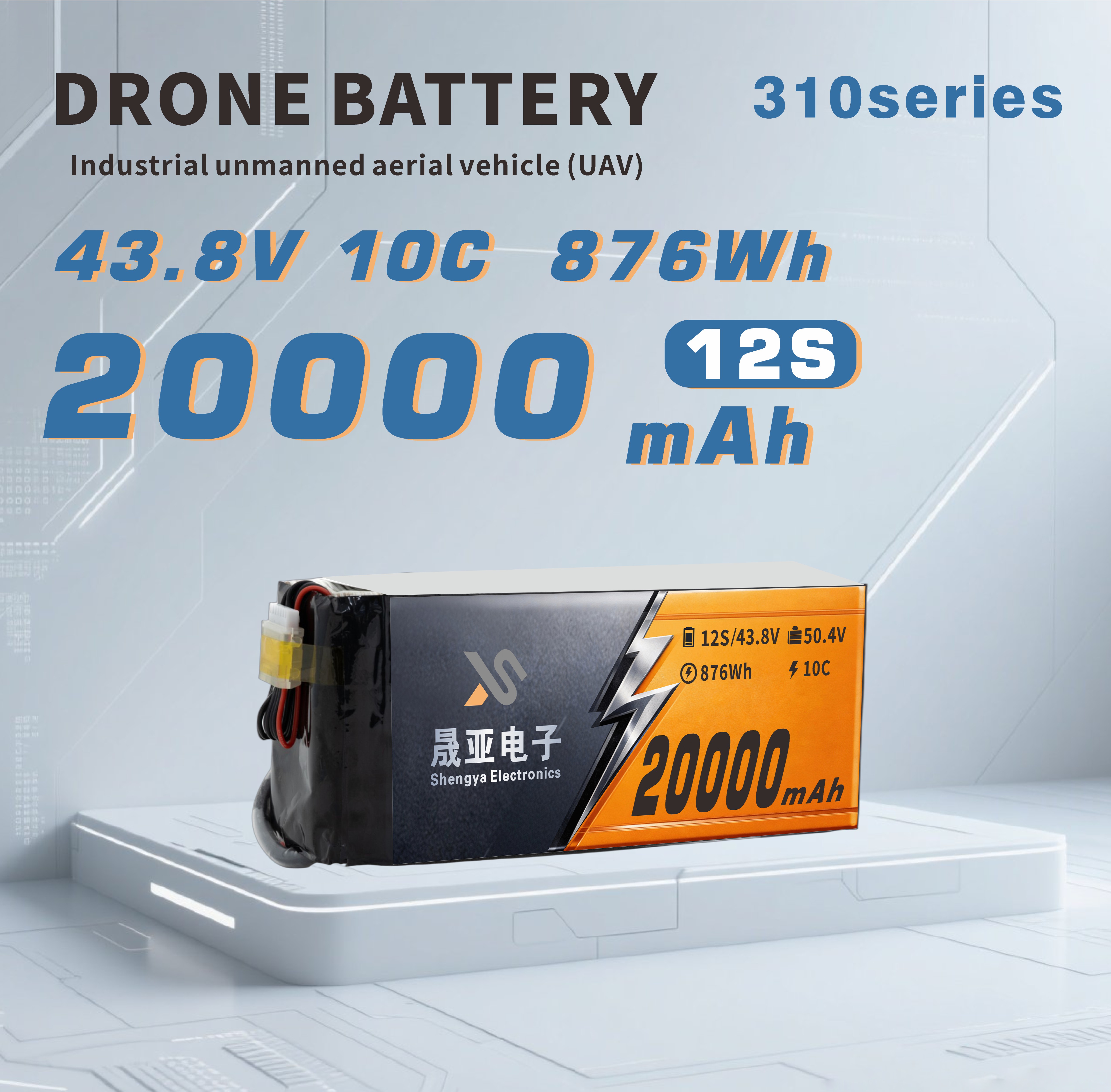
The commercial transition from traditional Lithium Polymer (LiPo) to semi-solid state chemistry fundamentally alters UAV payload and endurance calculations. Specifically, Nickel Manganese Cobalt (NMC) architectures allow manufacturers to push past legacy energy density limits. Fleet operators and drone manufacturers constantly struggle to balance maximum flight time with strict maximum takeoff weight (MTOW) limits. This requires precise battery capacity selection without sacrificing discharge performance. Navigating the current market requires moving beyond theoretical energy densities to evaluate actual available capacities and cell configurations. Operators must understand the operational trade-offs of integrating a Semi Solid State Drone Battery into enterprise workflows. We will break down the exact capacity ranges manufactured at scale, how voltage scaling impacts current draw, and the specific calculations needed to match battery specs to real-world flight demands.
Key Takeaways
Broad Capacity Spectrum: Commercially available capacities range from sub-4,000mAh packs for light commercial use up to massive 107Ah+ modules for heavy-lift applications.
Superior Usable Capacity: Reduced voltage sag under load allows operators to safely utilize a higher percentage of the battery’s rated capacity compared to standard LiPo equivalents.
The Density vs. Discharge Trade-off: While achieving up to 500Wh/kg, operators must evaluate if the continuous discharge rates (C-ratings) of high-capacity semi-solid packs align with their specific thrust requirements.
Configuration Flexibility: Available architectures scale from 4S to 24S, enabling seamless integration into diverse industrial UAV power systems.
The Current Market Landscape of Semi Solid State Drone Battery Capacities
Identifying the exact capacity ranges currently manufactured at scale prevents engineers from designing UAV systems around unavailable or experimental power sources. The market has matured rapidly over the last few production cycles. We now see a clear segmentation of battery capacities tailored to specific airframe sizes, motor KV ratings, and mission profiles. Selecting the right capacity tier dictates the entire physical and electrical architecture of the drone.
Underlying Chemistry and Capacity Enablement
NMC semi-solid state architectures allow manufacturers to safely push capacity limits beyond traditional lithium-ion constraints. By reducing the volume of liquid electrolyte and introducing a semi-solid conductive matrix, these cells achieve higher active material density. This structural change reduces dead weight within the cell casing. It allows for more energy storage per cubic centimeter. The result is a battery that delivers significantly higher amp-hours (Ah) without a proportional increase in physical footprint or mass. Furthermore, the semi-solid matrix restricts the formation of lithium dendrites, which historically limited the safe capacity thresholds of high-density pouch cells.
Prosumer and Light Commercial Capacities (Under 10,000mAh)
Manufacturers offer smaller semi-solid packs ranging from 3,000mAh to 8,000mAh. These capacities serve the light commercial sector. Inspection drones, mapping UAVs, and extended-endurance quadcopters benefit heavily from this tier. A 6,000mAh semi-solid pack can replace a similarly sized 4,000mAh LiPo. This direct swap extends flight times for bridge inspections or photogrammetry missions without requiring airframe modifications or motor upgrades. Operators flying sub-2kg airframes rely on these packs to push flight times past the 45-minute mark, allowing them to map larger acreage per deployment.
Mid-Range to Heavy-Lift Capacities (10,000mAh to 30,000mAh)
The standard enterprise tier relies on capacities between 10,000mAh and 30,000mAh. Common off-the-shelf configurations include 16Ah, 22Ah, and 30Ah packs. These sizes dominate the commercial sector. LiDAR scanning, medium payload delivery, and agricultural scouting require sustained power over 30 to 45 minutes. A 22Ah pack provides the necessary energy reserves to power both the flight controller and high-draw payloads like laser scanners or multispectral cameras. This capacity range represents the sweet spot for balancing overall weight with extended operational endurance. Drones in this category typically utilize 6S or 12S power systems, drawing between 30 and 60 amps during a standard hover.
Ultra-High Capacity Industrial UAV Battery Modules (30,000mAh to 100Ah+)
For extreme applications, the upper limits of current commercial availability stretch from 30,000mAh up to 107Ah. These massive energy reservoirs serve heavy agricultural spraying, high-payload logistics, and tethered-alternative persistent flight systems. Deploying a 100Ah module completely changes the logistical footprint of a drone operation. These packs are heavy, often requiring multi-rotor platforms with significant thrust capabilities and massive carbon fiber frames. However, they enable operations that were previously impossible with battery power alone, such as carrying 30kg liquid payloads over long distances or keeping a communications relay drone airborne for over two hours.
Cell Configurations and Voltage Scaling
Capacity does not exist in a vacuum; it interacts directly with series configurations. Semi-solid cells scale from 4S up to 24S. High-voltage systems allow for lower current draw to achieve the same total power output. For example, a drone requiring 2,000 watts of power pulls roughly 90 amps on a 6S (22.2V) system. On a 12S (44.4V) system, that same 2,000 watts requires only 45 amps. This lower current draw maximizes the efficiency of high-capacity packs. It reduces heat generation across the power distribution board and extends the lifespan of the battery during demanding flights. Moving to a 24S architecture further halves the amp draw, which is why ultra-high capacity packs (50Ah+) are almost exclusively wired in high-voltage configurations.
Evaluating High Energy Density UAV Battery Performance Metrics
Translating spec-sheet capacity into real-world flight endurance requires a deep understanding of discharge behavior. Total rated capacity only tells half the story. Operators must evaluate how much of that energy is actually usable before the drone must land. Relying solely on the printed amp-hour rating will result in inaccurate flight planning and potential mid-air power failures.
Theoretical vs. Usable Capacity
The discharge curve of semi-solid state batteries differs notably from traditional LiPo chemistry. LiPo batteries often experience severe voltage sag under heavy load. This sag triggers low-voltage alarms prematurely, forcing the drone to land even when 20% of the theoretical capacity remains in the pack. Semi-solid architectures maintain a flatter discharge curve. Reduced voltage sag preserves usable capacity. Drones can fly longer and utilize up to 90% of the rated amp-hours before reaching critical voltage cutoffs. This flatter curve translates directly to more minutes in the air. When a heavy gust of wind forces the flight controller to spike motor RPM, a semi-solid pack holds its voltage steady, preventing the sudden telemetry warnings common with older battery types.
Energy Density Benchmarks (The 250Wh/kg to 500Wh/kg Spectrum)
Gravimetric energy density dictates how much weight a battery adds to the MTOW. Traditional LiPo batteries typically cap out around 200 to 260Wh/kg. Semi-solid cells push this boundary significantly, operating in the 250Wh/kg to 500Wh/kg spectrum. The direct impact of a 500Wh/kg High Energy Density UAV Battery is profound. If a drone allocates 5kg for battery weight, a 200Wh/kg LiPo provides 1,000 Watt-hours. A 400Wh/kg semi-solid pack in that same 5kg weight allowance provides 2,000 Watt-hours. This doubles the flight time without altering the drone's center of gravity or exceeding its MTOW. Engineers can use this weight savings to either extend flight time or mount heavier, more capable sensors.
The Retrofit Advantage (Volumetric Density and Form Factor)
Volumetric density refers to the physical footprint of the battery. High-capacity semi-solid packs pack more energy into a smaller physical space. This presents a massive retrofit advantage. Operators can carry significantly more power without appreciably adding weight or bulk to existing airframes. However, integration challenges exist. Existing drone chassis designed for bulkier LiPo packs may require custom mounting plates or modified battery trays to secure denser, slightly differently shaped semi-solid modules securely. When retrofitting an older airframe, follow these specific integration steps:
Measure the internal dimensions of the existing battery bay down to the millimeter.
Compare the center of gravity (CG) of the old LiPo against the new semi-solid pack to ensure the flight controller does not have to overcompensate for a nose-heavy or tail-heavy craft.
Upgrade the battery connectors (e.g., moving from XT90 to AS150) if the new capacity and voltage configuration demands higher continuous current handling.
Install high-density foam padding to secure the smaller, denser pack within a larger legacy battery tray, preventing in-flight shifting.
Capacity Range
Typical Configuration
Primary Use Cases
Estimated Energy Density
Average Hover Current Draw
3,000mAh - 8,000mAh
4S - 6S
Mapping, Inspection, Prosumer
260 - 300 Wh/kg
15A - 25A
10,000mAh - 30,000mAh
6S - 12S
LiDAR, Medium Logistics, Agriculture
300 - 400 Wh/kg
30A - 60A
30,000mAh - 100Ah+
12S - 24S
Heavy Lift, Spraying, Tethered Alt
400 - 500 Wh/kg
60A - 120A+
Trade-Offs: High Rate UAV Battery Requirements vs. Maximum Capacity
Every battery chemistry involves compromises. The inherent chemical trade-off in battery design sits between storing maximum energy and delivering it rapidly. High capacity does not automatically equal high performance under aggressive throttle inputs. Engineers must carefully balance the desire for maximum flight time against the physical reality of the drone's motor draw.
Continuous and Burst Discharge Rates (C-Ratings)
The primary limitation of densely packed cells is their discharge rate. Semi-solid state batteries often feature lower continuous discharge rates compared to high-discharge LiPos. A standard LiPo might boast a 25C or 50C continuous rating. Many semi-solid packs operate optimally between 3C and 10C. Operators must match high-capacity packs to motor draw requirements. Because total amp output is Capacity multiplied by C-rating, a massive battery compensates for a lower multiplier. A 30Ah battery at 5C delivers 150 amps continuous. This often satisfies the requirements for a High Rate UAV Battery solution in heavy-lift scenarios, provided the pilot avoids aggressive, acrobatic maneuvers. If a drone requires 200 amps for a sustained climb, a 10Ah semi-solid pack rated at 5C (50 amps max) will immediately overheat and fail. Sizing the capacity up to 40Ah at 5C (200 amps max) solves the discharge bottleneck.
Charge Rate Limitations and Capacity Retention
Charging dense cells requires patience. Manufacturer constraints typically dictate optimal charging at 0.4C for maximum capacity retention over the battery's lifespan. Strict upper limits usually hover around 5C, though charging at maximum rates degrades the internal chemistry faster. Charging a 30Ah battery at 0.4C (12 amps) takes roughly 2.5 hours. This turnaround time impacts operational tempo. Fleet managers must calculate how many spare packs are required to maintain continuous flight operations while depleted packs recharge slowly. Field operations often require heavy-duty generators and multi-channel charging hubs to keep a rotation of high-capacity packs ready for deployment.
Thermal Management at High Capacities
Heat dissipation becomes a critical reality in densely packed, high-capacity semi-solid cells during sustained discharge. Because the cells are packed tightly to maximize volumetric density, internal heat struggles to escape. Sustained high-amp draws generate significant thermal loads. Operators must evaluate the need for active cooling. Specific airflow designs in the UAV canopy or custom heat sinks may be necessary to prevent thermal throttling during long-duration summer flights. When designing a custom airframe, engineers should route the prop wash directly over the battery bay. Enclosing a 50Ah semi-solid pack in a sealed, unventilated carbon fiber fuselage will lead to dangerous internal temperatures during a 45-minute flight.
Sizing and Selecting the Right Industrial UAV Battery
Selecting the correct capacity requires a mathematical approach. Guesswork leads to overweight drones or shortened flight times. A strict framework for calculating exact capacity needs based on mission parameters ensures optimal performance. You must analyze the specific electrical demands of your motors, electronic speed controllers (ESCs), and payloads.
Payload and Endurance Calculations
Determining required Watt-hours (Wh) involves analyzing average hover current and peak forward-flight current. First, calculate the total wattage required to hover with the specific payload. Multiply that wattage by the desired flight time (in hours) to find the target Watt-hours. For example, a drone requiring 1,500W to hover for 0.5 hours needs 750Wh of usable energy. Divide the target Wh by the system voltage to find the required Amp-hours. Factor in an additional 20% buffer to avoid draining the pack completely. This methodology prevents undersizing the power system. If you plan to fly in high winds, increase the buffer to 30%, as the flight controller will constantly surge power to the motors to maintain position.
Redundancy and Multi-Pack Configurations
Aviation authority compliance often dictates power system design. Flights over people or Beyond Visual Line of Sight (BVLOS) operations require redundancy. Using a single massive pack, such as one 60Ah 12S battery, introduces a single point of failure. If a cell drops, the drone falls. Dual parallel or series configurations, such as two 30Ah 6S packs, mitigate this risk. Multi-pack setups allow the flight controller to isolate a failing battery and land safely on the remaining power. Evaluating this risk profile is mandatory for enterprise fleet deployment. When wiring dual packs, ensure the wire gauges (typically 8AWG or 10AWG) can handle the combined current without melting the insulation.
Determine the absolute maximum takeoff weight (MTOW) your motors can lift at 50% throttle.
Subtract the dry weight of the airframe and the weight of your payload from the MTOW to find your maximum allowable battery weight.
Divide the maximum battery weight by the energy density (e.g., 400Wh/kg) to find your maximum possible Watt-hours.
Divide the Watt-hours by your system voltage to find your maximum Amp-hour capacity.
Verify that the resulting capacity, multiplied by the battery's C-rating, exceeds your drone's peak amp draw.
Implementation Risks and Procurement Realities
Adopting new energy storage technology involves logistical and financial realities. Upgrading a fleet requires more than simply swapping connectors. Procurement teams must understand the broader implications of the transition, from charging infrastructure to shipping regulations.
Cost per Watt-Hour and Price-to-Capacity Analysis
Semi-solid state technology commands a premium over traditional LiPo. Budget-friendly prosumer options exist, but high-end enterprise modules represent a significant capital expenditure. However, evaluating the cost purely on initial purchase price is flawed. Operators must calculate ROI based on increased flight time, reduced battery swap labor, and extended cycle life. Semi Solid State Batteries often sustain more charge cycles before degrading below 80% capacity, lowering the long-term cost per flight hour. Fewer landings for battery swaps mean more acres mapped or more crops sprayed per day, directly increasing operational efficiency.
Supply Chain and Lead Times
Current manufacturing bottlenecks affect procurement timelines. While 10Ah and 22Ah packs are generally available off-the-shelf, ultra-high capacity modules (50Ah+) often require custom orders. Lead times for these massive packs can stretch into months. Fleet managers must forecast their battery needs well in advance to avoid grounding drones due to supply chain delays. Establishing a direct relationship with the manufacturer ensures priority allocation during peak production seasons.
Safety, Hazard Mitigation, and Compliance
Semi-solid chemistry offers an improved safety profile. The reduced liquid electrolyte makes these cells more resistant to thermal runaway and puncture compared to standard LiPos. However, handling any densely packed lithium-based energy storage involves inherent hazards. Shipping high-capacity batteries requires strict adherence to UN38.3 certification requirements. Packs exceeding 100Wh face severe restrictions on commercial aircraft, requiring specialized freight logistics. Furthermore, ground crews must upgrade charging infrastructure. Standard hobby-grade chargers cannot safely handle the high-voltage and high-capacity demands of a 24S 50Ah enterprise pack. Dedicated, industrial-grade charging stations wired to 220V circuits are a mandatory facility upgrade to prevent electrical fires in the charging bay.
Conclusion
Procure sample packs in your target S-configuration to verify physical fitment and center of gravity impacts on your specific airframe.
Conduct bench testing for thermal performance under simulated load to ensure your canopy provides adequate airflow for heat dissipation.
Recalculate your MTOW budgets to maximize payload capacity based on the new gravimetric energy density metrics.
Audit your existing charging infrastructure to confirm it can handle the specific voltage and capacity requirements of the new packs safely.
Upgrade your battery connectors and wiring harnesses to accommodate the sustained current draws of high-capacity flight operations.
FAQ
Q: What is the maximum capacity currently available for a semi solid state drone battery?
A: Commercially available semi-solid state drone batteries currently reach up to 107Ah for specialized heavy-lift applications. Standard enterprise modules typically range between 16Ah and 30Ah, while custom configurations can push beyond 100Ah depending on the airframe's payload capacity.
Q: How does the usable capacity of semi solid state batteries compare to standard LiPo batteries?
A: Semi-solid state batteries experience significantly less voltage sag under load. This flatter discharge curve allows operators to safely use up to 90% of the rated capacity before reaching critical low-voltage cutoffs, whereas traditional LiPos often trigger alarms much earlier.
Q: Are high-capacity semi solid state batteries heavier than traditional UAV batteries?
A: No, they are lighter per Watt-hour. Semi-solid state batteries offer higher gravimetric energy density (up to 500Wh/kg) compared to traditional LiPos (typically 200-260Wh/kg). This means you get significantly more capacity for the exact same physical weight.
Q: Can I use a high-capacity semi solid state battery for high-speed or high-agility drones?
A: It depends on the current draw. Semi-solid batteries generally have lower continuous discharge rates (C-ratings). While a massive capacity pack can output high total amps, they are better suited for steady, endurance-focused flights rather than aggressive, high-burst acrobatic maneuvers.
Q: What are the recommended charging rates for maximum capacity retention in semi-solid batteries?
A: To maximize lifespan and capacity retention, manufacturers typically recommend charging at 0.4C. While some packs can handle burst charging up to 5C, frequent high-speed charging accelerates chemical degradation and reduces the overall cycle life of the battery.