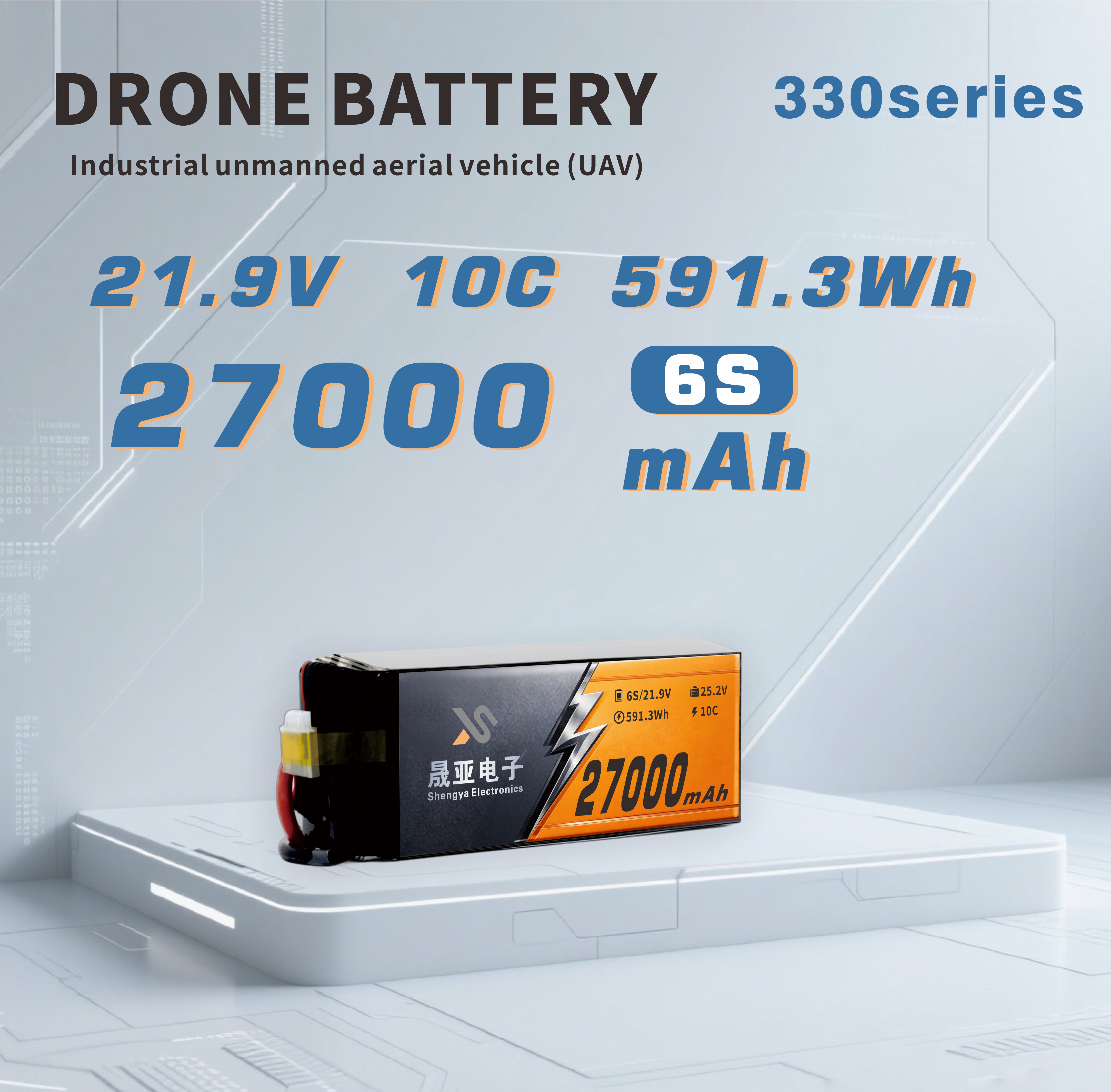
Compact UAV platforms operate under strict Size, Weight, and Power (SWaP) constraints. Every gram impacts flight time, and every millimeter dictates available payload capacity. Off-the-shelf hard-case batteries often force severe aerodynamic compromises or add dead weight to the airframe. Conversely, poorly specified custom soft packs introduce thermal runaway risks and rapid lifecycle degradation under heavy loads. In aerospace engineering, an OEM battery is never just a generic replacement part. It is a highly specialized power system engineered to the exact physical and electrical specifications of the original airframe. This ensures seamless integration that aftermarket retrofits simply cannot match. Specifying an OEM Soft Pack UAV Battery architecture requires rigorous technical evaluation. You must analyze cell chemistry, mechanical integration, and Battery Management System (BMS) compatibility to ensure reliable deployment at scale.
SWaP-C Optimization: Soft pack architectures offer the highest energy-to-weight ratio, making them the default choice for a lightweight UAV battery, provided mechanical vulnerabilities are engineered out.
Thermal and Swelling Realities: High-discharge applications will induce cell swelling; OEM designs must account for volumetric expansion tolerances within the drone fuselage.
BMS Integration is Non-Negotiable: A custom OEM UAV battery requires a tightly integrated, application-specific BMS to manage peak draw, cell balancing, and telemetry.
Certification Bottlenecks: Factoring in UN38.3 and UL testing timelines during the OEM prototyping phase is critical to avoiding delayed time-to-market.
The Engineering Case for a Soft Pack Drone Battery in Compact Airframes
Engineering teams must define strict baseline requirements for compact UAVs before selecting a power source. Sub-2kg tactical drones require absolute weight optimization to maintain agility and endurance. Confined-space inspection platforms demand highly specific geometric profiles to navigate tight industrial environments. Success relies on maximizing energy density without expanding the physical footprint of the aircraft. A well-designed Soft Pack Drone Battery meets these exact criteria. It provides the necessary power output while conforming to restrictive fuselage limitations.
Form Factor Flexibility vs. Hard Case Limitations
Pouch cells offer superior volumetric efficiency compared to cylindrical cells. Standard 18650 or 21700 cells leave inherent physical gaps when stacked together in a pack. You lose valuable internal volume to the empty spaces between the cylinders. Rigid plastic enclosures further compound this wasted space. They add unnecessary bulk and fixed dimensions to the final assembly. Soft pack architectures eliminate these physical inefficiencies entirely by utilizing flat, stackable layers of active material.
OEM manufacturers can tailor the exact length, width, and thickness of pouch cells. This flexibility allows engineers to utilize dead space within unique fuselage geometries. You can design batteries that curve around payload bays or fit seamlessly into narrow wing roots. This custom sizing maximizes the active chemical material within the airframe. It ensures no internal volume goes to waste. When evaluating form factors, consider these specific advantages:
Complete utilization of irregular fuselage cavities.
Elimination of interstitial gaps found in cylindrical cell packs.
Customizable aspect ratios to balance center of gravity (CG) requirements.
Reduced overall pack thickness for low-profile fixed-wing designs.
Weight Reduction and Payload Trade-offs
Eliminating rigid plastic or metal casings yields immediate weight savings. Hard cases often account for up to fifteen percent of a battery's total mass. Soft packs rely on thin aluminum laminate films to enclose the electrolyte and electrodes. This drastically reduces the inactive weight of the power system. The structural integrity shifts from the battery case to the drone fuselage itself, allowing the airframe to act as the primary protective shell.
You can correlate this saved battery weight directly to performance gains. Every gram saved allows for increased sensor payload capacity. You can integrate heavier, higher-resolution optical cameras or add secondary LiDAR modules without exceeding the maximum takeoff weight (MTOW). Alternatively, keeping the payload constant extends hover times significantly. Lighter aircraft draw fewer amps to maintain altitude. This creates a compounding effect on overall flight endurance.
Battery Architecture
Volumetric Efficiency
Weight Penalty (Casing)
Form Factor Customization
Primary Application
Cylindrical (18650/21700)
Low (Gaps between cells)
High (Steel cans + plastic holders)
Poor (Fixed cylinder sizes)
Large agricultural or cargo UAVs
Hard Case LiPo
Medium
Medium (Rigid plastic shell)
Poor (Standard block shapes)
Consumer photography drones
OEM Soft Pack Pouch
High (Flush stacking)
Low (Aluminum laminate film)
Excellent (Custom L/W/H)
Compact tactical & inspection UAVs
Core Evaluation Dimensions for an OEM Soft Pack UAV Battery
Procurement and engineering teams must establish strict technical criteria to vet potential battery designs and manufacturing partners. A systematic evaluation prevents catastrophic failures during field deployment. It ensures the power system aligns perfectly with the flight envelope and environmental operating conditions.
Cell Chemistry and Discharge Profiles
Standard Lithium-Polymer (LiPo) cells provide a reliable baseline for drone applications. However, emerging high-voltage LiPo (LiHV) cells push maximum voltage limits higher, typically from 4.2V to 4.35V per cell. This increases overall energy density without adding physical mass. Silicon-anode pouch cells represent another major advancement. They offer significantly higher capacity than traditional graphite anodes, though they require careful management of expansion during charge cycles.
You must evaluate continuous versus burst C-ratings carefully. Specific flight profiles demand vastly different power delivery curves. VTOL (Vertical Take-Off and Landing) transitions require massive, short-duration current bursts to lift the airframe vertically. Fixed-wing cruise phases require lower, sustained continuous discharge rates. Over-specifying C-ratings adds unnecessary weight because high-discharge cells require thicker internal current collectors. Under-specifying them leads to rapid voltage sag, excessive heat generation, and potential aircraft loss.
Thermal Management in High-Draw Scenarios
Soft pack designs lack inherent structural heat sinks. Cylindrical cells use their metal casings to absorb and dissipate thermal energy. Pouch cells trap heat within their tightly stacked layers. High-draw scenarios generate significant internal temperatures rapidly. You must address this lack of thermal mass during the design phase to prevent premature cell degradation.
Evaluate thermal dissipation strategies rigorously. Phase change materials (PCMs) can absorb excess heat during peak draw spikes, melting to absorb thermal energy and solidifying as the pack cools. Thermal potting compounds help transfer heat away from the cell tabs, which are the primary source of localized heating. You must also design active airflow routing within the drone chassis. Directing prop-wash or forward-flight airflow over the battery bay provides essential convective cooling. This prevents thermal runaway during aggressive flight maneuvers.
Smart battery integration requires a highly capable BMS architecture. The system must support robust communication protocols to interface with the flight controller. CAN bus and SMBus are industry standards for reliable telemetry data. The BMS must provide exceptional state-of-charge (SOC) accuracy, typically utilizing advanced coulomb counting algorithms combined with voltage lookup tables. It must also track long-term state-of-health (SOH) degradation metrics to alert operators before a battery becomes unsafe for flight.
Engineers face trade-offs regarding BMS physical placement. Integrating the BMS directly into the soft pack wrapping creates a self-contained smart battery. However, this adds localized heat and bulk to the pouch, potentially complicating the physical fit. Housing the BMS on the drone's main distribution board saves battery weight and isolates the heat source. It simplifies the battery pack but complicates the airframe electronics. You must weigh these options based on your specific platform constraints.
Custom UAV Batteries vs. Off-the-Shelf: A Procurement Framework
Deciding between OEM manufacturing and commercial off-the-shelf (COTS) solutions requires a structured framework. Custom UAV Batteries require upfront engineering investment and lead times. COTS batteries offer immediate availability but often force design compromises that degrade aircraft performance. You must evaluate the overall value proposition for your specific production run.
Defining OEM vs. Aftermarket/COTS in UAV Manufacturing
True OEM partnerships differ vastly from generic aftermarket solutions. An OEM UAV Battery guarantees exact specification matching for the final product. The manufacturer builds the pack to your precise mechanical and electrical blueprints. This eliminates the integration risks associated with third-party retrofits, such as incorrect connector types, mismatched wire gauges, or incompatible communication protocols.
OEM partnerships ensure strict component consistency. COTS vendors frequently change cell suppliers or BMS firmware without notifying end-users. This alters discharge profiles and invalidates flight software tuning. OEM agreements lock in specific cell chemistries, tab welding techniques, and BMS components. This guarantees supply chain stability over the UAV's entire production lifecycle, ensuring unit 1,000 performs exactly like unit 1.
When to Specify an OEM UAV Battery
Certain operational thresholds easily justify dedicated OEM investment. Proprietary airframe shapes often physically reject standard block batteries. If your drone features a blended wing body or a highly compact central hub, a custom pouch is mandatory. Extreme environmental requirements also demand specialized electrolyte formulations. Standard batteries fail rapidly in sub-zero temperatures or high-desert heat.
Specific military or enterprise compliance standards mandate OEM development. Defense contracts often require localized manufacturing, strict supply chain audits, and specific encryption for BMS telemetry. Enterprise inspection drones require specialized safety certifications to operate near critical infrastructure. COTS batteries rarely meet these stringent, application-specific regulatory demands.
Tooling Costs, NRE, and Scalability
Custom soft packs carry upfront costs that procurement teams must budget for accurately. Non-Recurring Engineering (NRE) fees cover the initial design, thermal modeling, and BMS programming. Custom mold costs apply if you require entirely unique pouch dimensions rather than selecting from a manufacturer's existing tooling library. Manufacturers also enforce Minimum Order Quantities (MOQs) to justify the production line setup and raw material sourcing.
You must calculate a cost-benefit timeline. Compare upfront OEM costs against long-term unit cost reductions. At scale, custom batteries often become cheaper per unit than high-end COTS packs. They also reduce warranty claims by preventing integration failures. Follow these steps when evaluating procurement costs:
Request a detailed breakdown of NRE fees versus per-unit costs.
Identify if the manufacturer owns existing molds close to your required dimensions to save tooling costs.
Negotiate staggered delivery schedules to manage MOQs without overwhelming your inventory space.
Factor in the cost of delayed time-to-market if a COTS battery forces a late-stage airframe redesign.
Implementation Risks and Mitigation Strategies
Soft pack batteries introduce specific physical and operational hazards. A competent OEM partner anticipates these challenges during the design phase. They implement rigorous mitigation strategies to protect the aircraft and the operator. Ignoring these risks guarantees field failures, lost airframes, and potential safety liabilities.
Mechanical Vulnerability and Puncture Mitigation
The primary risk of soft packs is mechanical vulnerability. The thin aluminum laminate film offers zero resistance to sharp objects. Susceptibility to puncture is exceptionally high during rough landings, crashes, or even aggressive handling by field operators. A punctured pouch cell immediately exposes the internal lithium and electrolyte to ambient humidity. This rapidly escalates into uncontrollable thermal runaway and fire.
You must engineer robust mitigation strategies into the airframe. Design structural carbon fiber battery bays to shield the pack from external impacts. Specify Kevlar wrapping around the battery itself for localized puncture resistance without adding significant weight. Utilize vibration-isolating mounting foams. These foams absorb high-frequency motor vibrations. They prevent the laminate edges from chafing against the rigid carbon frame over time, which can slowly wear through the protective film.
Managing Cell Swelling and Cycle Life Degradation
Pouch cell swelling is an unavoidable reality of lithium-ion chemistry. Repeated high-draw cycles and normal aging generate internal gases through electrolyte decomposition. Over time, the physical volume of the battery increases. If you design a battery bay with zero clearance, the battery will become permanently wedged inside the drone. In severe cases, the swelling can exert enough outward pressure to crack the drone's structural frame or pop fuselage latches.
You must specify strict expansion tolerances in the OEM design phase. Engineers typically account for eight to ten percent volumetric growth over the battery's lifecycle. Design the battery compartment to accommodate this specific expansion rate. Implement secure but flexible retention straps, such as industrial hook-and-loop fasteners. Do not use rigid hard-mounting brackets or tight friction-fit slots that restrict natural cell expansion.
Regulatory Compliance and Shipping Certifications
Global deployment requires mandatory testing and certifications. UN38.3 certification is an absolute legal requirement for air transportation of lithium batteries. It subjects the battery to a brutal testing regimen, including altitude simulation, thermal extremes, severe vibration, mechanical shock, external short circuits, impact, overcharge, and forced discharge. Relevant UL or CE marks are also necessary for commercial enterprise deployment in specific regions.
Failing certification delays product launches by months. Poor OEM cell selection, weak tab welding, or inadequate BMS safety cutoffs cause these failures. You must audit a manufacturer's compliance history before signing contracts. Request past UN38.3 test reports for similar battery architectures. Ensure they have established relationships with certified third-party testing laboratories to expedite the approval process.
Conclusion
Specify an OEM soft pack architecture only when you can actively manage the associated thermal and mechanical vulnerabilities. You must engineer the airframe and the battery as a single cohesive unit rather than treating the power source as an afterthought. This integrated approach maximizes flight time, preserves payload capacity, and ensures operational safety in demanding environments.
Initiate the procurement process by requesting cell data sheets and thermal performance models under simulated flight loads. Demand a clear timeline for a First-Article Inspection (FAI) prototype. Finally, design your drone's battery bay with a minimum 8% volumetric expansion tolerance to accommodate future swelling and prevent airframe damage.
FAQ
Q: What is the difference between an OEM UAV battery and an aftermarket drone battery?
A: OEM batteries are produced to the exact specifications of the original drone manufacturer. They ensure seamless mechanical and electrical integration. Aftermarket batteries are generic, third-party alternatives. They often compromise physical fit, alter the center of gravity, or fail to communicate properly with the drone's flight controller.
Q: What is the typical cycle life of an OEM soft pack drone battery?
A: You can expect a standard cycle life of 300 to 500 cycles for high-discharge LiPo packs. The depth of discharge heavily impacts this lifespan. Consistently draining the battery below 20% capacity will degrade the internal chemistry faster, reducing the total usable cycles.
Q: How do we prevent a soft pack UAV battery from swelling?
A: While minor swelling is inevitable over time, you can minimize it significantly. Specify a C-rating that exceeds your drone's maximum burst draw. Implement active cooling within the fuselage. Most importantly, program the BMS to strictly prevent over-discharge and over-charging scenarios.
Q: What is the standard MOQ for custom UAV batteries?
A: Realistic industry ranges typically vary from 500 to 5,000 units. The exact number depends on specific cell availability, custom pouch dimensions, and the complexity of the BMS. Manufacturers often negotiate MOQs based on upfront NRE agreements and long-term production forecasts.
Q: Can a Lightweight UAV Battery operate in sub-zero temperatures?
A: Standard LiPo cells suffer severe voltage sag in freezing conditions. For sub-zero operations, you must specify specialized low-temperature electrolyte chemistries. Alternatively, you can integrate self-heating BMS features. These systems use a small amount of battery power to warm the cells before flight.
Q: What communication protocols should a custom drone battery BMS support?
A: A modern smart battery should support robust, industry-standard protocols. CAN bus and UAVCAN/DroneCAN are highly recommended for their reliability in noisy electrical environments. SMBus is also widely used. These protocols ensure seamless telemetry integration with advanced flight controllers like Pixhawk.