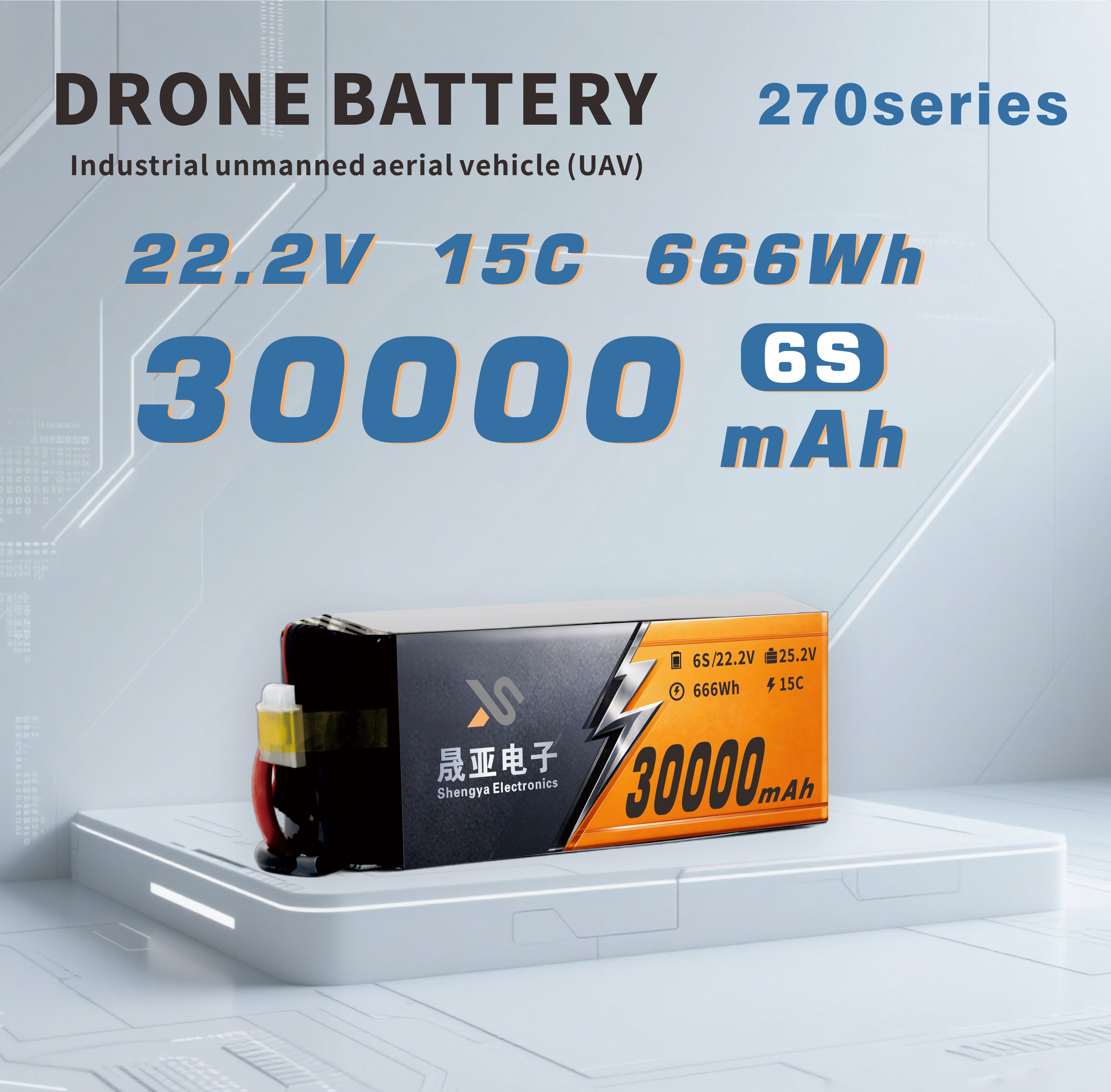
Commercial UAV operators constantly push for longer flight times and heavier payloads. This demand drives the shift toward ultra-high voltage chemistries, specifically the 4.45V per cell standard. Upgrading your power system isn't a simple swap. Integrating a 4.45V Drone Battery without verifying Electronic Speed Controller (ESC) tolerances, motor KV ratings, and precise charge cutoff parameters introduces severe risks. You face potential thermal runaway, accelerated cell degradation, and catastrophic in-flight failure if hardware limits are ignored. This guide provides a systematic framework for evaluating, selecting, and safely integrating these high-voltage packs into enterprise UAV platforms. We will walk through hardware compatibility, mission-specific matching, and charging infrastructure. By following these steps, operators achieve maximum efficiency and extended flight times without compromising reliability or safety in the field.
Key Takeaways
Voltage Compatibility is Non-Negotiable: Total pack voltage (e.g., 12S at 4.45V/cell = 53.4V fully charged) must strictly align with the maximum voltage thresholds of the UAV’s ESCs and power distribution board.
Energy Density vs. Cycle Life Trade-offs: While 4.45V cells offer superior energy density for a long-lasting drone battery, they require rigorous thermal management and precise charging infrastructure to prevent premature capacity loss.
Mission-Driven Selection: Battery selection must be dictated by the specific mission profile—balancing continuous discharge rates (C-rating), flight patterns, and environmental operating conditions rather than simply defaulting to the highest amp-hour rating.
Infrastructure Requirements: Transitioning to high voltage lithium batteries mandates specialized chargers capable of tight voltage cutoff control and heavy-duty wire harnesses to handle sustained power delivery.
Understanding the 4.45V Drone Battery Architecture
The Shift to Ultra-High Voltage (LiHV)
Standard lithium polymer (LiPo) cells operate with a maximum charge voltage of 4.2V and a nominal voltage of 3.7V. When UAV propulsion systems draw heavy continuous currents, these standard cells experience rapid voltage sag. This sag forces the motors to demand higher amperage to maintain the necessary wattage for flight, which generates excess heat and drains the pack faster. The shift to 4.45V high-voltage cells fundamentally alters this discharge curve. By raising the maximum charge threshold to 4.45V and the nominal voltage to 3.8V or 3.85V, operators gain access to a higher rate discharge platform. This elevated voltage ceiling ensures the battery sustains motor RPM much deeper into the flight cycle. Consequently, the propulsion system draws fewer amps to maintain altitude and speed. This reduces overall heat generation and prevents the late-flight voltage sag that frequently triggers premature auto-landing sequences in standard packs.
Chemistry Type
Nominal Voltage
Maximum Charge Voltage
Typical Cutoff Voltage (Under Load)
Energy Density (Wh/kg)
Standard LiPo
3.70V
4.20V
3.30V
180 - 220
Standard LiHV
3.80V
4.35V
3.40V
220 - 250
Ultra-High Voltage (4.45V)
3.85V
4.45V
3.50V
260 - 300+
Chemistry Innovations (Solid-State and Semi-Solid State)
Achieving a stable 4.45V charge requires significant advancements beyond traditional liquid electrolytes. Older liquid electrolytes tend to oxidize and generate gas when pushed past 4.2V, leading to dangerous cell swelling. Modern high-voltage packs increasingly rely on semi-solid state technology and advanced high-voltage cathode systems. By replacing volatile liquid solvents with gel-like or hybrid solid electrolytes, manufacturers push the chemical intercalation limits without triggering immediate thermal instability. These advancements drastically improve the headline cell-level energy density, often exceeding 270 Wh/kg. This allows operators to pack more watt-hours into the exact same physical footprint. Furthermore, the semi-solid state architecture mitigates the physical swelling and volatility traditionally associated with aggressively flown drone chemistries. You get a more resilient power source capable of handling the physical vibrations and thermal stress of industrial applications.
Baseline Success Criteria
Evaluating the success of a 4.45V integration requires strict, measurable baselines. You cannot just fly the drone and guess if it feels better. A successful transition should yield a 15% to 20% increase in actual flight time under identical payload conditions compared to a standard 4.2V pack of the same physical weight. Thermal metrics must remain stable. Post-flight battery temperatures should not exceed 55°C (131°F) under normal ambient conditions. Finally, the integration must result in zero ESC faults, desyncs, or overvoltage warnings during aggressive throttle punches. If you hit these metrics, you have confirmed that the power delivery system is perfectly matched to the elevated voltage curve.
Core Hardware Compatibility: ESCs, Motors, and Power Distribution
Calculating Peak Voltage Across Configurations (4S to 24S)
Failing to calculate the exact peak voltage of a fully charged 4.45V pack is the most common cause of hardware failure during an upgrade. Operators must evaluate the absolute maximum voltage before connecting the battery to the drone. Assuming a 12S LiHV pack shares the same peak voltage as a standard 12S LiPo is a dangerous oversight that will destroy your electronics.
Cell Count (S)
Standard LiPo Peak (4.2V/cell)
LiHV Peak (4.45V/cell)
Voltage Delta
4S
16.8V
17.8V
+1.0V
6S
25.2V
26.7V
+1.5V
12S
50.4V
53.4V
+3.0V
14S
58.8V
62.3V
+3.5V
24S
100.8V
106.8V
+6.0V
As demonstrated, a 12S system jumps from 50.4V to 53.4V. If the UAV's power distribution board or ESC capacitors are rated for an absolute maximum of 50V, plugging in a fully charged 12S 4.45V pack will instantly blow the components. You will hear a loud pop, smell burning electronics, and your drone will be grounded until you replace the entire power distribution system.
ESC Tolerances and Firmware Calibration
Auditing ESC datasheets is a mandatory step before deploying High Voltage Lithium Batteries. You must verify the maximum voltage limit of the ESC's MOSFETs and input capacitors. If the ESC is rated for 60V, a 12S 4.45V pack (53.4V) falls within a safe operational margin. Beyond hardware checks, firmware calibration is essential. Flight controllers and ESCs rely on voltage telemetry to trigger low-voltage alarms and return-to-home (RTH) protocols. Because a 4.45V cell has a different discharge curve, leaving the low-voltage cutoff at standard 3.3V/cell settings will result in the drone draining the battery too deeply, causing irreversible chemical damage.
Connect your flight controller to your configuration software (e.g., Mission Planner, Betaflight, or DJI Assistant).
Navigate to the Power or Battery telemetry tab.
Adjust the maximum cell voltage parameter to 4.45V to ensure accurate battery percentage readings.
Set the first-level low voltage warning to 3.6V per cell. This gives the operator ample time to conclude the mission.
Set the critical low voltage alarm (auto-landing trigger) to 3.5V per cell under load. Never let a 4.45V cell drop below 3.4V under load.
Motor KV Matching for High Voltage
Electric motor RPM is dictated by the KV rating multiplied by the input voltage. When you increase the voltage by switching to a 4.45V power source, the motors will attempt to spin faster. If you maintain the same propeller size and pitch, this increased RPM forces the motor to draw exponentially more current. This rapidly overheats the stator windings and will eventually burn out the ESC. To prevent over-amping the system, you must recalculate the propulsion dynamics.
For example, a 100KV motor running on a standard 12S pack (50.4V) spins at a maximum of 5,040 RPM. Switch to a 12S 4.45V pack (53.4V), and that same motor tries to spin at 5,340 RPM. Pushing a 28-inch carbon fiber propeller an extra 300 RPM requires massive torque, which translates directly to a massive amp spike. You have two primary solutions. First, select a motor with a lower KV rating (e.g., 90KV) to maintain the original target RPM at the new, higher voltage. Second, reduce the propeller pitch and diameter (e.g., moving from a 28x8 prop to a 28x6 prop) to decrease the aerodynamic load on the existing motors.
Mission-Specific Matching Criteria
Avoiding the "Highest Amp-Hour" Trap
Selecting a battery based solely on the highest available Amp-Hour (Ah) rating is a fundamentally flawed strategy that degrades flight performance. Batteries are heavy. Adding a larger capacity pack increases the total takeoff weight. This requires the motors to generate more thrust just to keep the drone airborne. This increased thrust demands higher continuous amperage, effectively burning through the extra capacity you just added. Instead of defaulting to the largest pack, match the UAV battery to the actual mission load, flight pattern, and voltage platform. Calculate the precise power consumption of your payload and propulsion system, and select a capacity that optimizes the payload-to-weight ratio for your specific flight duration requirements.
Payload-to-Weight Optimization
The primary advantage of a 4.45V architecture is its superior energy density. This allows operators to approach payload optimization from two distinct angles. First, you can maintain the same physical battery weight as your previous 4.2V setup but gain significantly more watt-hours. This extends flight times for long-endurance mapping or surveillance missions where every extra minute covers more acreage. Alternatively, you can select a 4.45V pack with the exact same watt-hour capacity as your old battery, which will physically weigh less. This weight reduction frees up capacity for heavier sensors, LiDAR units, or cinematic camera rigs without altering the drone's center of gravity or flight dynamics.
Discharge Rates (C-Rating) vs. Flight Dynamics
Matching the continuous discharge rate (C-rating) to the mission profile is critical for maintaining voltage stability. Steady-state hovering tasks, such as agricultural mapping or infrastructure inspection, draw a relatively low, consistent current. Dynamic, high-throttle maneuvers, such as cinematic tracking or FPV racing, demand massive, instantaneous power spikes.
UAV Platform Type
Typical Configuration
Required C-Rating
Flight Profile
Nimble Inspection Drone
4S 450mAh - 1300mAh
75C - 120C
Rapid directional changes, heavy wind resistance corrections, high burst amps.
Steady-state hovering, grid mapping, slow and controlled movements.
Selecting an excessively high C-rating for a heavy-lift drone adds unnecessary weight in the form of thicker internal cell tabs. Conversely, selecting too low a C-rating for an agile drone guarantees severe voltage sag, sluggish controls, and potential power loss during a critical maneuver.
Operating Climate and Thermal Realities
Extreme temperatures severely impact the performance and safety of high-voltage chemistries. In cold weather (below 40°F/4°C), the internal resistance of lithium cells increases dramatically. This restricts current flow, causing severe voltage sag the moment you apply throttle. Operators must utilize thermal management strategies, such as heated storage cases, to pre-heat packs to at least 75°F (24°C) before takeoff. Conversely, hot weather operations risk pushing the cells past their safe thermal limits. Because 4.45V cells already operate at a higher energy state, aggressive flying in high ambient temperatures can rapidly push internal temperatures toward the thermal runaway threshold. Ensure your UAV frame provides adequate airflow over the battery compartment for active heat dissipation during flight. Never charge a battery that is still hot from a flight; let it cool to room temperature first.
Infrastructure, Charging, and Lifecycle Management
Precision Charging Infrastructure
Transitioning to an ultra-high voltage platform mandates an immediate audit of your charging equipment. Headline capacity numbers and extended flight times rely entirely on tightly controlled charge cycles. You must utilize specialized chargers that support exact 4.45V/cell cutoff parameters. Attempting to charge a 4.45V pack with a standard 4.2V LiPo charger will leave the battery undercharged, completely negating the capacity and voltage advantages you paid for. Conversely, using poorly calibrated equipment that overcharges the cells past 4.45V introduces immediate chemical instability, risking fire and permanently destroying the battery's internal structure.
Verify your charger has a dedicated "LiHV" mode that can be manually adjusted to exactly 4.45V per cell.
Ensure the charger can handle the high wattage required to charge large enterprise packs (e.g., a 2000W dual-channel charger for 12S/14S batteries).
Always balance charge. High-voltage cells are highly sensitive to voltage imbalances between individual cells.
Calibrate your charger's voltage reading with a high-quality digital multimeter every six months to ensure the cutoff voltage remains accurate.
Wire Harness and Connector Integrity
The sustained amperage delivered by a High-Performance Drone Battery places immense stress on the electrical pathways. Careful wire harness assembly is critical for ensuring strong, stable connections that prevent resistance bottlenecks. A poor solder joint or an undersized wire will act as a resistor, generating extreme heat and restricting power flow to the ESCs. Operators must evaluate and deploy industry-standard connectors rated for high continuous loads.
Connector Type
Continuous Amp Rating
Peak Amp Rating
Best Use Case
XT60
60A
90A
Small inspection drones, 4S-6S setups.
XT90 / XT90-S
90A
120A
Mid-size cinematic rigs, 6S-8S setups.
AS150
150A
200A
Heavy-lift multirotors, 12S setups. Features anti-spark.
Wire gauge (AWG) must match the connector and the expected amp draw. Running 12 AWG wire on a system pulling 150 amps will melt the silicone insulation and cause a short circuit. Heavy-lift platforms require 8 AWG or dual 10 AWG runs to safely handle the current transfer from the battery to the power distribution board.
Maximizing the Lifecycle of a Rechargeable Drone Battery
While 4.45V chemistries offer unmatched performance, maintaining that high energy state accelerates chemical degradation if mismanaged. To maximize the lifecycle of a Rechargeable Drone Battery, operators must enforce strict depth of discharge (DoD) and storage protocols. Avoid draining the cells below 20% remaining capacity during routine flights. Pushing the battery to 0% causes irreversible damage to the cell matrix. More importantly, never leave a 4.45V pack fully charged for more than 24 hours. Prolonged exposure to maximum voltage rapidly increases internal resistance and degrades capacity. Always discharge unused packs to a precise storage voltage—typically 3.8V to 3.85V per cell—to stabilize the chemistry and delay internal resistance buildup.
Evaluating Manufacturers and Procurement Risks
Assessing Build Quality and Cell Matching
Industrial drone operations require absolute reliability, which begins at the manufacturing level. When procuring high-S count configurations (such as 12S or 14S), internal resistance (IR) matching across all cells is paramount. If a manufacturer bundles cells with varying IR levels, the pack will become unbalanced under heavy load. The weaker cells will drain faster, dropping below safe voltage thresholds and causing the entire pack to fail mid-flight. Audit vendors for their cell-matching tolerances. Ask for IR batch reports before purchasing in bulk. Furthermore, evaluate the necessity of integrated Battery Management Systems (BMS). For commercial fleets, a smart BMS that logs cycle counts, monitors individual cell temperatures, and automatically discharges to storage voltage is a mandatory safety investment.
Regulatory Compliance and Documentation
Deploying industrial drone batteries requires strict adherence to international transport and safety regulations. Before finalizing procurement, outline the required certifications. UN38.3 certification is non-negotiable for legally transporting lithium batteries via air or ground freight. Material Safety Data Sheets (MSDS) must be on file for emergency response protocols. Additionally, CE and FCC certifications ensure the battery's electronic components (like the smart BMS) do not cause electromagnetic interference with the UAV's flight controller or GPS modules. Always verify manufacturer claims regarding capacity and continuous discharge rates against independent third-party testing data. This prevents you from procuring falsely advertised consumer-grade packs for demanding enterprise applications.
Conclusion
Audit your current UAV hardware by checking the ESC datasheets and power distribution board limits to confirm they can handle the 53.4V peak of a 12S 4.45V system.
Recalculate your motor KV and propeller pitch combinations to ensure the higher voltage does not over-amp your propulsion system.
Upgrade your charging infrastructure to units that explicitly support adjustable 4.45V per cell cutoff parameters and high-wattage balancing.
Select a Long-Lasting Drone Battery based on your specific mission payload and continuous amp draw, rather than just buying the highest amp-hour rating available.
Initiate a limited pilot program with a single drone, using data logging to monitor ESC temperatures and voltage sag before deploying the high-voltage packs across your entire fleet.
FAQ
Q: Can I charge a 4.45V drone battery with a standard LiPo charger?
A: While you can safely charge a 4.45V battery to 4.2V using a standard charger, doing so completely negates the capacity and flight time benefits you paid for. To fully utilize the battery's potential, you must use a charger with a specific LiHV mode or an adjustable cutoff setting programmed exactly to 4.45V per cell.
Q: What happens if my ESC is only rated for standard 12S (50.4V) and I use a 12S 4.45V (53.4V) battery?
A: Plugging a 53.4V battery into an ESC rated strictly for 50V creates a severe overvoltage event. There is a high probability of instantly blowing the ESC's input capacitors or destroying the MOSFETs upon connection or during the initial throttle application, resulting in total system failure.
Q: Do 4.45V high voltage lithium batteries degrade faster than standard 4.2V batteries?
A: Yes, if mismanaged. The chemical reality is that holding cells at a higher charge state accelerates internal degradation. However, strict adherence to storage voltage practices (discharging to 3.85V within 24 hours of charging) significantly mitigates this wear, allowing for a competitive operational lifespan.
Q: How does a 4.45V battery affect my drone's low-voltage warning settings?
A: You must recalibrate your telemetry and flight controller low-voltage alarms. Because the discharge curve and safe minimum voltage per cell differ from standard LiPo packs, leaving the alarms at standard settings will cause the drone to trigger return-to-home protocols inaccurately or drain the cells too deeply.
Q: Are semi-solid state 4.45V batteries safer than traditional LiPo batteries?
A: Semi-solid state chemistries generally offer improved thermal stability and are less prone to physical swelling or venting under heavy loads. This reduces the risk of catastrophic in-flight failure, though they still require strict adherence to proper charging and storage protocols to maintain safety.
Q: How do I choose the right C-rating for a long-lasting drone battery?
A: Calculate the maximum continuous amp draw of your UAV's propulsion system under full load. Divide that number by the battery's capacity in Amp-hours to find the minimum required C-rating. Over-speccing adds unnecessary physical weight, while under-speccing causes severe voltage sag and excessive heat generation.